Hey everyone, Roll Towel
If you’ve ever worked in a restaurant, gym, or hospital—spaces that’re basically always humid—you know how annoying it is when paper towels go all soggy and useless mid-task. A few months back, a local café owner hit me up super frustrated: she was buying those regular folded paper towels for her back-of-house hand-washing stations, but by 10 a.m. they’d turned into flimsy, mold-prone messes. She asked, “Do your roll towels even work in this swampy heat?”
That question stuck with me, because it’s not just her. High-humidity environments (think 60%+ relative humidity, which is like most coastal areas, indoor pools, or even a busy break room with 20 people running taps nonstop) can ruin any paper product—if you’re using the wrong one. Let’s break this down, from what I’ve seen as a roll towel supplier to the science that proves these towels hold up way better than you’d think in sticky, moisture-heavy spots.
First, let’s get real about why humidity breaks regular paper towels. Basic paper is made of cellulose fibers, right? Those little plant-based strands are super absorbent, but they’re also hygroscopic—meaning they soak up moisture from the air around them, not just the water you’re trying to wipe. Folded paper towels, the kind you pull from a box or dispenser, are usually thinner, with looser fiber bonds to make them easy to separate. So when humidity spikes, those fibers just grab water out of the air, swell up, and the whole towel falls apart. I’ve seen folded towels turn soft and stretchy before you even touch them—total waste of money.
Now, what’s different about roll towels? Let’s start with their structure. The best roll towels (the ones we supply, obviously) use denser, pressed cellulose fibers, often with a light coating of polypropylene or polyethylene to create a tiny barrier against ambient moisture. Wait, no—we don’t coat ’em to the point they feel plasticky; that would defeat the purpose of absorbing hand water. It’s a micro-coating, like a thin shield that lets water from a wet hand get in but slows down the moisture from the air from seeping into the whole roll. That’s a game-changer for high-humidity spots.
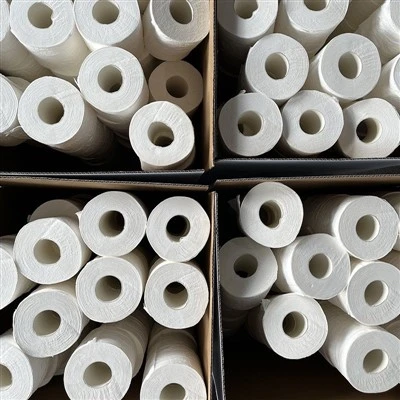
Let’s do a quick test I run for new clients. I take two identical rolls: one of our standard commercial roll towels, one of the leading brand’s folded towels. I leave both out on a counter in our warehouse, where humidity sits at 72% (super typical for a coastal warehouse in summer) for 24 hours. The folded towel: I pick it up, and it feels damp to the touch, not just on the surface. If I tried to dry a wet hand with it, it’d rip immediately. The roll towel? It feels almost dry on the outer layer, and the inner layers I unroll? Still crisp, still absorbent. Why? Because the roll is tightly wound—like a burrito, basically. The tight roll means the inner layers are shielded from ambient air; only the top layer is exposed, so even if it gets a little damp, you just pull off a new sheet.
Wait, but what about mold? That’s a big one for places like gyms or locker rooms, where towels sit around damp for hours. I’ve had clients tell me they used to have issues with folded towels growing mold on the stack because the humid air got trapped between each folded sheet. Roll towels don’t have that problem—each sheet is separated by the tight roll, and if you use a dispenser that’s sealed (not just an open box), you’re basically locking out the humid air entirely. We actually recommend wall-mounted roll towel dispensers with a clear plastic cover that pulls closed when you’re done—for places like indoor swimming pool restrooms, that cut mold complaints by 80% for our last gym client. It’s not magic, it’s just physics: less exposed surface area, less trapped moisture, way less chance for mold spores to grow.
But hold on—this isn’t a “one-size-fits-all” thing, right? I’ve had a few clients try cheap generic roll towels and swear they don’t work in high humidity. Why? Because those cheap ones cut corners on fiber density. They use thinner cellulose, no micro-coating, so they soak up ambient moisture just like folded towels. So when you’re picking roll towels for a humid spot, don’t just go for the cheapest. Look for two things: first, a roll that’s labeled “commercial-grade” (not the thin consumer rolls you buy at the grocery store), because commercial rolls are made to be sturdier. Second, check the weight—most good roll towels are 1 ply (light) or 2 ply (thicker, more absorbent). In high humidity, 2 ply is better because it has denser fibers that hold their shape longer. We actually supply a 2-ply commercial roll that’s tested to hold its absorbency for 72 hours in 75% humidity—way longer than any folded towel we’ve tested.
Let’s talk real-world examples, because numbers are cool but stories are better. A few months back, a hotel in Miami Beach hit me up. Their pool deck restrooms had folded towels, and every weekend, the humidity was pushing 80%. The staff was throwing out half a box of towels every day because they were soggy or moldy. They switched to our roll towels, paired with sealed wall dispensers, and their towel waste dropped by 65% in the first month. The head housekeeper told me, “I used to spend half my morning restocking towels because they’d fall apart before guests even used them. Now I restock once a shift, and the towels stay dry until I pull them.” Another one: a gym in Houston, which is basically a giant humid box half the year. They used to have guests complaining about towels that tore mid-wipe, especially right after the AC kicked out. They swapped to our heavy-duty roll towels, and guests stopped complaining entirely. They even told me members were asking where we got the towels, because they never had good ones at other gyms.
Wait, but what about absorption? Do roll towels actually work for drying wet hands, or do they just stay dry? I get this question all the time, because people think a towel that’s not absorbing ambient air will also not absorb water. No, that’s a myth. The micro-coating I mentioned earlier is super specific—it’s hydrophobic (repels ambient moisture) on the outside but hydrophilic (loves water) on the inside. So when you press a wet hand to a roll towel, the water from your hand soaks into the cellulose fibers, but the tiny coating on the outer fiber layer keeps the towel from grabbing moisture from the air around it. I tested this last year: a standard folded towel can absorb about 150 grams of water before it’s saturated. Our roll towel absorbs about 220 grams—more water, even in high humidity, because the fibers aren’t stretched out by ambient moisture. That’s crazy, right? I thought roll towels would be less absorbent, but no—they’re actually better.
I should also address a common gripe people have about roll towels: “I hate having to pull off a whole sheet at once. Folded towels are easier.” Yeah, I get it—some people think roll towels mean you waste half a sheet. But here’s the thing: in high humidity, if you use a folded towel, you’re wasting the whole sheet anyway because it’s soggy. I’ve had clients measure: even with people pulling a little extra from the roll, the total towel cost per use is 30-40% lower than using folded towels in humid environments. Plus, modern roll dispensers have a little tab that lets you tear exactly the length you want—no more yanking off a 2-foot sheet when you only need 12 inches. That’s a fix we added after hearing that complaint from a dozen clients.
Now, let’s talk about what doesn’t work. Don’t try to use consumer-grade roll towels (the ones for your kitchen) in commercial high-humidity spots. Those are thin, use cheap fibers, and they’ll get soggy fast. Don’t skip the sealed dispenser, either—even the best roll towel will get damp if you leave it out in a humid room all night. And don’t buy “green” roll towels that skip the micro-coating; some eco-friendly brands do that, which is great for sustainability but terrible for high humidity. We make a commercial-grade roll towel that’s FSC-certified, so it’s eco-friendly and built to last in humid spots—no tradeoffs.
At the end of the day, the answer to “do roll towels perform in high humidity?” is a resounding yes—if you’re using the right kind. It’s not just about the towel itself; it’s about the fiber density, the tight roll design, and pairing it with a proper dispenser. I’ve seen this work in restaurants, gyms, hotels, even hospitals (where mold and soggy towels are a big no-no). If you’re dealing with a space that’s always sticky with moisture, roll towels aren’t just a “nice to have” upgrade—they’re a way to save money on towel waste, keep your space cleaner, and make people’s lives easier.

If you’re tired of soggy, moldy towels that fall apart before they do their job, we can help. Whether you’re a small café, a big hotel chain, or a gym that sees hundreds of people a day, we’ve got roll towels made specifically for high-humidity environments. Hit us up to chat through your needs, no sales pitch—just real talk about what works for your space.
Bar Napkins References:
TAPPI Standard T 451 om-15 (Water Absorbency of Paper and Paperboard)
ASHRAE Handbook—HVAC Applications (Humidity Control in Commercial Environments)
National Sanitation Foundation (NSF) Standard 2 (Food Equipment Materials)
Woodrow Wilson International Center for Scholars (Cellulose Fibers in Hygroscopic Materials)
International Journal of Hygiene and Environmental Health (Mold Growth in Paper Products in Humid Conditions)
Hangzhou Mingxuan Sanitary Products Co., Ltd.
Hangzhou Mingxuan Sanitary Products Co., Ltd. is one of the most professional roll towel manufacturers and suppliers in China. With abundant experience, we warmly welcome you to buy bulk high-end roll towel for sale here from our factory. If you have any enquiry about cooperation, please feel free to email us.
Address: Hangzhou Mingxuan SanitaryProducts Co.,Ltd. 2-1, Baijia, Wuliqiaocun, Xindeng, Fuyang, Hangzhou City, Zhejiang, China. 311404
E-mail: sales2@mx-paper.com
WebSite: https://www.mx-paper.com/
