Hey there! I’m in the enamel wire business, and today I wanna talk about something super important in our field: the self – resonance frequency of enamel wire coils. Enamel Wire
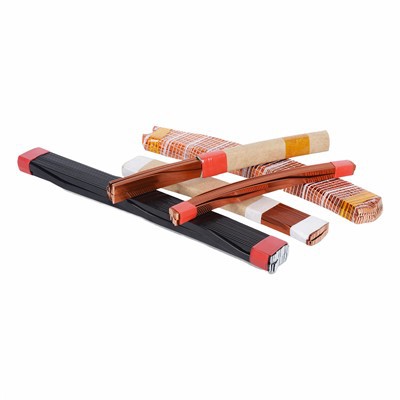
First off, what the heck is self – resonance frequency? Well, when you’ve got an enamel wire coil, it’s not just a simple piece of wire wound up. It has both inductance and capacitance. Inductance is like the coil’s ability to store energy in a magnetic field when current flows through it. Capacitance, on the other hand, is about storing energy in an electric field between the turns of the wire.
When these two properties interact, there comes a point where they start to work together in a really special way. That’s the self – resonance frequency. At this frequency, the inductive reactance and the capacitive reactance of the coil cancel each other out. Reactance is kinda like resistance, but it’s specific to AC (alternating current) circuits. When they cancel, the impedance of the coil reaches its minimum value. Impedance is the total opposition to the flow of AC in a circuit, including both resistance and reactance.
Why does this matter? Well, in a whole bunch of applications, the self – resonance frequency of enamel wire coils can make or break the performance of a device. Take radio frequency (RF) circuits for example. In an RF circuit, you often use enamel wire coils as part of the tuning mechanism. If the self – resonance frequency of the coil isn’t right, the circuit won’t be able to tune in to the correct frequencies. That means your radio won’t pick up the stations you want, or your wireless device won’t be able to connect properly.
Another area where it’s crucial is in power electronics. In some power converters, enamel wire coils are used to store and transfer energy. If the self – resonance frequency is off, it can lead to all sorts of problems like increased power losses, overheating, and even reduced efficiency. Nobody wants that, right?
Now, let’s talk about what affects the self – resonance frequency of enamel wire coils. One big factor is the number of turns in the coil. Generally speaking, the more turns you have, the lower the self – resonance frequency will be. That’s because more turns mean more inductance. And as we know, inductance and the self – resonance frequency are inversely related.
The spacing between the turns also plays a role. If the turns are closer together, the capacitance between them will be higher. Higher capacitance means a lower self – resonance frequency. So, when we’re making enamel wire coils, we have to be really careful about how we wind the wire to get the right self – resonance frequency.
The type of enamel wire we use matters too. Different enamel coatings have different dielectric constants. The dielectric constant affects the capacitance of the coil. A higher dielectric constant means more capacitance, and again, that can lower the self – resonance frequency.
As an enamel wire supplier, I know how important it is to provide high – quality wire that can help our customers achieve the right self – resonance frequency in their coils. We’ve got a wide range of enamel wires, each with its own unique properties. For example, we have wires with different enamel thicknesses. Thicker enamel can provide better insulation, but it can also affect the capacitance and thus the self – resonance frequency. So, we work closely with our customers to understand their specific needs and recommend the best wire for their applications.
We also offer custom – made enamel wires. If a customer has a very specific self – resonance frequency requirement for their coils, we can work with them to develop a wire that meets those needs. We use advanced manufacturing techniques to ensure that the wire has consistent properties throughout. This way, every coil our customers make will have the same self – resonance frequency, which is super important for mass production.
In the process of making the enamel wire, we pay close attention to the quality control. We test the electrical properties of the wire regularly to make sure that it meets the standards. We also look at the mechanical properties like flexibility and adhesion of the enamel coating. A wire that’s too brittle can break during the winding process, which can mess up the self – resonance frequency of the coil.
But it’s not just about supplying the wire. We also offer technical support to our customers. We have a team of experts who can help with coil design. They can calculate the expected self – resonance frequency based on the wire properties and the coil geometry. They can also troubleshoot if a customer is having problems with the self – resonance frequency of their coils.
If you’re in the business of making enamel wire coils, you know how critical it is to get the self – resonance frequency right. And that’s where we come in. We’re not just a supplier; we’re your partner in achieving the best performance for your coils. Whether you’re working on a small – scale project or a large – scale manufacturing operation, we’ve got the products and the expertise to help you.

So, if you’re interested in learning more about our enamel wires and how they can help you get the right self – resonance frequency for your coils, don’t hesitate to reach out. We’re always happy to have a chat and see how we can work together to make your projects a success.
Wrapped Wire References:
- "Electromagnetics for Engineers" by Nathan Ida
- "Power Electronics: Converters, Applications, and Design" by Ned Mohan, Tore M. Undeland, and William P. Robbins
- "RF Circuit Design: Theory and Applications" by Chris Bowick
Tianjin Jingwei Power Technology Co., Ltd.
As one of the most professional enamel wire manufacturers and suppliers in China, we’re featured by quality products and good service. Please rest assured to buy durable enamel wire made in China here from our factory. Contact us for more details.
Address: No.1 Chuangxin Rd. Xiaozhan Industrial Park, Jinnan District, Tianjin, China
E-mail: info@jwdc.cn
WebSite: https://www.jw-dcs.com/
