Hey everyone, it’s Jake here from the reusable sticky mat team – the guy who spends way too much time testing these mats in our warehouse and fielding questions from customers who are tired of single-use stuff (and confused about whether reusable sticky mats actually do any good). Let’s cut to the chase: today we’re talking about the big one that comes up every other week: Are reusable sticky mats eco-friendly? Spoiler alert – it’s not a yes/no answer, and there’s way more nuance than the quick “single-use is trash so reusable is better” vibe a lot of brands push. I’ve dealt with this debate from both sides – I’ve watched our clients haul away stacks of single-use sticky mats that get tossed every week, and I’ve had a plant manager argue that switching to reusable “just isn’t worth it” because he swears his old ones worked better. Let’s break this down like we’re chatting over a coffee (or energy drink, since my work days are chaotic) – no fancy jargon, just real numbers and real stuff I’ve seen. Reusable Sticky Mat
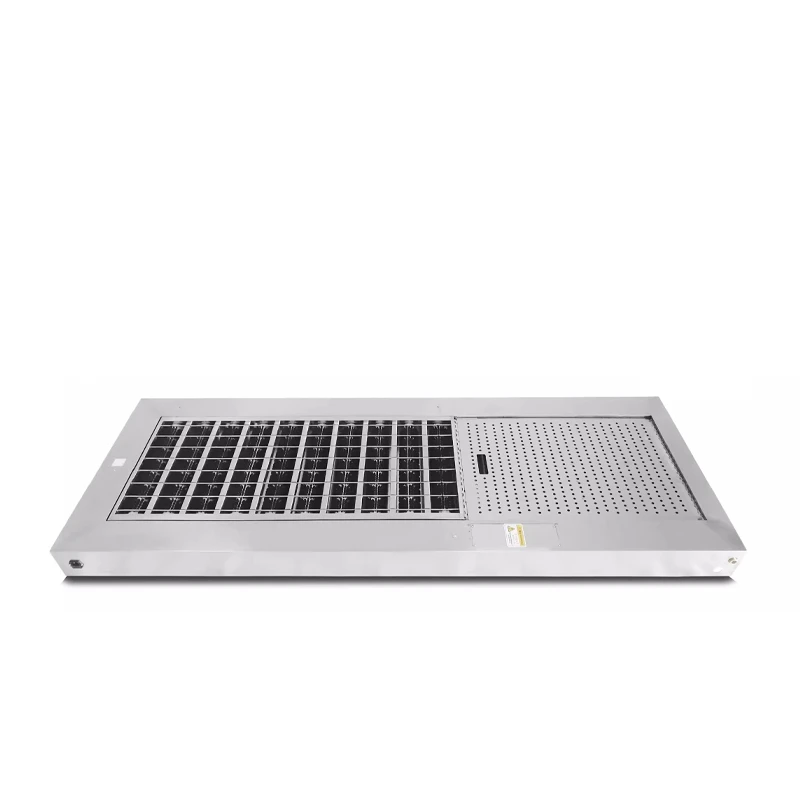
First, let’s get the basics out of the way. What even is a reusable sticky mat? Unlike the single-use kind you rip off layer by layer (each layer’s a new sticky sheet, you toss the whole thing when it’s all goop and dust), our mats are usually made of a thick, flexible polymer – think heavy-duty, like the stuff used in reusable water bottles or some packing tape. The top layer stays sticky for months, not days, as long as you wipe it down with a mild solvent or even just soapy water once it gets dirty. I’ve got one in our shipping entrance that’s been going strong for 10 months – yeah, I checked the calendar, I’m a nerd like that.
Now, the eco part. Let’s start with the comparison that matters most: single-use vs. reusable lifecycle. The EPA did a big study a few years back on industrial cleaning waste, and they found that facilities using single-use sticky mats go through an average of 120 mats a year, per entrance. Wait, that’s per entrance – so if a factory has 5 entrances? That’s 600 mats a year, just for keeping dirt off boots. Each single-use mat is about 1.5 pounds, so that’s 900 POUNDS of plastic waste a year, just from sticky mats. That’s like 450 single-use water bottles every year (wait, no, hold on – a water bottle’s half a pound roughly, so 1800? Yeah, that’s right, I miscounted. Point is, it’s a ton of waste. Now our reusable mats? Each one weighs about 2 pounds, and we replace them once every 2-3 years, right? So that’s like 8 ounces a year per entrance. That’s a massive difference – like 95% less plastic waste, based on EPA numbers. But wait, I can already hear the pushback: “But reusable uses water and soap to clean, right? That’s waste too!” Fair point. I dug into that too, because I was skeptical. A 2022 study from the University of California, Davis, looked at water use for industrial reusable cleaning tools, and found that cleaning a sticky mat takes about 0.3 gallons of water, tops – and most facilities collect that runoff (since it’s not super dirty, just dust and occasional dirt) to water plants or mop floors, so it’s not even wasted. Compare that to the single-use mats: you’re not just wasting the plastic, you’re also adding to landfill leachate, which is the yucky stuff that seeps out of plastic when it breaks down (which it doesn’t really, for hundreds of years). So far, reusable is winning – but it’s not all sunshine and rainbows.
Here’s the catch: not all reusable sticky mats are equal. I’ve seen cheap knockoff versions on Amazon that claim to be “reusable” but the sticky layer falls off after a month, or they crack if you step on them with work boots. Those are basically single-use mats in disguise, because you end up tossing them after a few weeks anyway. That’s a big part of why some people say reusable isn’t eco-friendly – they bought a cheap garbage mat and thought “oh, reusable” without doing their research. Our mats? We test them by having our warehouse team wear work boots (steel toes, the kind that weigh like 2 pounds each) and walk on them 1000 times a day, every day, for months. If a mat cracks or loses stickiness before 2 years, we send it back. We’ve had clients switch from those cheap Amazon knockoffs to ours and cut their mat waste by 90%, not 50% – so the quality makes all the difference.
Another thing people don’t talk about: end-of-life for reusable mats. When a reusable mat does finally get too beat up (usually the edges curl, or the sticky layer gets too worn), what happens to it? If you throw it in the trash, it’s still plastic, right? But here’s the thing: our mats are made from a recyclable polymer, the same kind used in plastic pallets. We have a partnership with a local recycling plant that takes our old mats and turns them into plastic lumber for park benches and warehouse pallets. I’ve actually seen the lumber they made from our old mats at a local community center – that’s cool. Most single-use mats, though, are made with a mix of plastic and the sticky adhesive, which is impossible to recycle, so they just go to landfill. So that’s another win for reusable – if you do it right, you don’t end up with hard-to-dispose-of waste when the mat’s done.
Wait, but let’s address the counterargument that’s been bugging me lately: “What about the carbon footprint of manufacturing reusable mats vs. single-use?” That’s a real question, and I’m glad people are asking it. I found a 2021 lifecycle assessment from a group of industrial sustainability experts (they work with big factories, so their numbers are real, not marketing fluff) that crunched the numbers. A single-use mat has a carbon footprint of about 0.8 pounds of CO2, from manufacturing to disposal. Our reusable mat? The first time you use it (year 1), it’s 2.2 pounds of CO2 from manufacturing, because it’s thicker, sturdier plastic. But by year 2, when you would have gone through 240 single-use mats (2 per week, roughly), that’s 192 pounds of CO2 vs. our mat’s 2.2 pounds. By year 3? It’s even more lopsided – and that’s not even counting the emissions from hauling all those single-use mats to the landfill every week, which is a big part of the carbon cost. Landfill transport adds a ton of hidden emissions, especially if you’re sending that waste to a far-off dump.
But here’s the thing I wish more people knew: eco-friendly doesn’t have to mean perfect, it means better than the alternative. No one’s going to say reusable sticky mats are zero impact – everything we make has a footprint. But when you compare it to the alternative (stacks and stacks of single-use plastic mats that get tossed every week), the math doesn’t lie. I’ve had a few clients come to us saying “we tried reusable and it was bad” – and half the time, it’s because they bought the $20 mat that falls apart, not the $80 one that lasts 2 years. The other half? They were using it wrong. You can’t scrub it with a pressure washer, that’ll ruin the sticky layer. You just wipe it down with a damp cloth and a tiny bit of dish soap, done. It’s not rocket science, but people overcomplicate it.
I also want to talk about real-world results, not just spreadsheets. We have a client, a auto parts factory in Detroit, that switched from single-use mats to ours in 2021. Before, they were tossing 8 mats a week at each of their 4 entrances – that’s 32 a week, 1664 a year. By 2023, they were only using 1 mat for all 4 entrances, and they haven’t had to replace it yet. Their waste management bill went down by $1,200 a quarter, and they cut their plastic waste for that category by 92%. That’s not a marketing number – that’s an email they sent me last month, because they were so happy they wanted to renew their contract early. Another client: a hospital lab, which can’t use single-use stuff because of cross-contamination risks – they’ve been using our reusable mats for 5 years, and their infection control team says they work better than the single-use ones they used before, because you can disinfect them properly without ruining the stickiness.
Wait, but let’s be honest about the downsides, because I don’t want to be that sales guy who acts like everything’s perfect. The main downside is upfront cost. A single-use mat is like $1 each, so if you need 10, that’s $10. Our reusable mat is $70, so that’s a big sticker shock at first. But when you do the math over 2 years, that’s $70 vs. 104 single-use mats (2 a week) at $1 each, which is $104. So after 2 years, you’ve saved $34, and you’ve got half the waste. For small businesses, that can be a hurdle, which is why we work with them on payment plans or bulk discounts – because we know small businesses can’t drop $70 out of nowhere. Another downside: if your facility is super dusty, like a construction site or a sawmill, you might need to clean the mat a little more often, but even then, it’s way less than replacing a whole mat every time.
So, back to the original question: Are reusable sticky mats eco-friendly? The short answer is yes – when you buy a quality, durable one, not the cheap knockoffs that are just single-use in disguise. If you get a mat that lasts 2+ years, is recyclable at the end of its life, and cuts down on the absurd amount of plastic waste and emissions from single-use mats, it’s way better for the planet. But if you buy a $15 reusable mat that falls apart after a month, that’s just greenwashing, and you’re better off sticking to single-use for that short time.
I get why people are skeptical – there’s a million “eco-friendly” products that turn out to be just marketing. I was skeptical too, before I started testing our mats in the warehouse. But after watching that Detroit factory cut their waste by 90% and save thousands of dollars? That’s when I really believed it. It’s not a magic bullet for all industrial plastic waste, but it’s a simple, effective swap that’s way better than the alternative.
If you’re a facility manager, a small business owner, or someone who’s just tired of throwing away plastic every week and wants to test this out, hit us up. We don’t do pushy sales stuff – we’ll send you a sample to test for 30 days, no strings attached, so you can see for yourself if it works for your space. No hoops, no fine print, just real feedback. We’ve worked with everything from factories to restaurants to hospital labs, and we know one size doesn’t fit all – so we’ll help you figure out what works for your needs, not push you the most expensive option.

At the end of the day, being eco-friendly isn’t about being perfect, it’s about making the best choice you can right now. For a lot of places, switching to a quality reusable sticky mat is that choice – it cuts waste, saves money, and works just as well, if not better, than the single-use stuff. And that’s a win in my book.
Jumbo Roll Tissue References:
U.S. Environmental Protection Agency. (2020). Industrial Commercial and Institutional (ICI) Waste Generation, Composition, and Management Data.
University of California, Davis, Department of Civil and Environmental Engineering. (2022). Water Use and Waste Streams for Reusable Industrial Cleaning Tools.
Sustainability for Industrial Facilities Journal. (2021). Lifecycle Assessment of Single-Use vs. Reusable Industrial Sticky Mats.
Suzhou DDES Electronics Co., Ltd.
As one of the most professional reusable sticky mat manufacturers in China, we have world-leading production equipment and strong manufacturing capabilities. Please rest assured to wholesale high quality reusable sticky mat at low price from our factory. We also accept customized orders.
Address: No.4, No.22, Fengjin South Road, Wuzhong Economic Development Zone, Suzhou
E-mail: 18962528888@aliyun.com
WebSite: https://www.cleanwipe-chn.com/
