As a conveyor chain supplier, I’ve spent thousands of hours working with factory managers, maintenance teams, and production supervisors who’ve told me the same frustrating story: their conveyor chains keep failing too soon—offending production schedules, blowing maintenance budgets, and leaving their teams scrambling to make emergency repairs. I get it; I’ve seen chains crack under uneven load, stretch beyond repair from poor lubrication, and corrode so badly in harsh washdown environments that they have to be replaced every 12 months instead of the 5 years they should last. Durability isn’t just a buzzword for us; it’s the difference between our customers hitting their production targets and dealing with costly shutdowns. Today, I’m sharing the science-backed, field-tested steps we’ve helped our own customers implement to extend their conveyor chain life, straight from the front lines of our work as a supplier. Conveyor Chain

Let’s start with the most common mistake I see: buying the wrong chain for the application. It sounds simple, but you’d be shocked how many companies pick a standard roller chain for a heavy-duty bulk material conveyor, or a light-duty plastic chain for a food processing line that runs 24/7 through high-temperature cleaning. Conveyor chains aren’t one-size-fits-all, and matching the chain grade, material, and design to your specific operating conditions is the foundation of durability. For heavy-duty applications like mining, construction, or quarrying—where chains carry loads of coal, gravel, or raw ore at high speeds—we supply heat-treated carbon steel chains that are far more durable than standard mild steel. Heat treatment, which involves quenching and tempering the steel, creates a harder outer layer that resists wear while keeping the inner core tough enough to absorb impact from dropped materials or uneven loading. For corrosive environments, like wastewater treatment plants or chemical processing facilities, we offer stainless steel chains (304 or 316 grade, depending on the chemical exposure) that resist rust and degradation far better than carbon steel. Even in food and beverage, where washdowns with high-pressure water and food-grade detergents are standard, using a specially coated chain (with a zinc or nickel plating, or a smooth, non-porous nylon or UHMW plastic cover) prevents corrosion and buildup of food residue that can cause premature wear. I had a customer in the snack food industry last year who was replacing their plastic chains every 8 months because of repeated washdown damage; we switched them to a 316 stainless steel chain with a food-grade coating, and their chain life doubled to 16 months. That’s the kind of impact getting the right chain for the job makes.
Next up: proper installation and tensioning. Even the highest-quality chain will fail early if it’s installed wrong. I’ve seen teams stretch a chain too tight because they think it’ll prevent slippage, but that’s a surefire way to cause excessive stress on the chain pins, rollers, and links, leading to early fatigue and breakage. On the flip side, a chain that’s too loose will slip off the sprockets, jump, and cause side loading that wears down links unevenly. The correct tension for a conveyor chain is roughly 1 to 2% of the chain’s total length; for a 10-foot chain, that means 1 to 2 inches of sag when the conveyor is at rest. It’s also critical to align the sprockets perfectly—misaligned sprockets cause the chain to rub against the side plates instead of rolling smoothly, leading to uneven wear that shortens chain life by 50% or more. We always advise our customers to use a laser alignment tool when installing sprockets, not just a straight edge, because even a 1-degree misalignment can cause significant wear over time. One of our steel mill customers learned this the hard way; they installed a new set of sprockets using a straight edge, only to find they were misaligned by 0.8 degrees. After 6 months, their chain was so worn on one side that it needed to be replaced, costing them $12,000 in downtime and parts. We helped them re-align the sprockets with a laser tool, and their chain wear dropped by 70% in the following year. That’s the kind of small, science-backed step that makes a huge difference.
Lubrication is another area where even experienced teams get it wrong. Many people either lubricate too little (leading to metal-on-metal friction that causes wear) or too much (which attracts dirt, dust, and debris that act like abrasive sandpaper on the chain components). The science here is simple: the lubricant acts as a barrier between the chain’s moving parts (pins, rollers, and bushing) to reduce friction and wear, while also protecting against corrosion. The right lubricant depends on your application: for standard dry or low-dust environments, a general-purpose grease with anti-wear additives (like zinc dialkyldithiophosphate, or ZDDP) works well. For high-temperature applications (like ovens or furnaces, where chain temperatures can reach 400°F or higher), you need a high-temperature synthetic lubricant that won’t break down or evaporate. For food processing, a food-grade lubricant that meets USDA H1 standards is non-negotiable, because even small amounts of lubricant that come into contact with food can cause safety issues. The key is a consistent, scheduled lubrication routine—not just a one-time application when the chain is installed. We recommend following the chain manufacturer’s lubrication schedule, which is usually based on operating hours; for most roller chains, that’s every 100 to 200 operating hours for standard applications, and every 50 hours for heavy-duty or high-speed operations. I once worked with a packaging company that was failing their chains every 9 months because they only lubricated once a year. We set them up with a quarterly lubrication schedule, and their chain life extended to over 3 years. That’s a change in routine, not a change in parts, that delivered massive savings.
Protecting the chain from contaminants is another critical factor for durability. Dust, dirt, metal shavings, food particles, and other abrasive materials act like a grinding compound between the chain’s links, causing wear that’s far faster than normal friction. In coal handling or wood processing facilities, where dust is pervasive, we recommend adding chain guards and seals to keep debris out of the chain’s interior. Sealed chain designs, which have rubber or nylon seals between the pins and bushings, are especially effective here; the seals keep lubricant in and contaminants out, doubling chain life in dusty environments. For applications with extreme debris, like scrap metal handling, some of our customers use a “chain wiper” at the inlet of the conveyor to wipe off excess material before it can reach the chain. Even in clean environments, like electronic assembly lines, small metal shavings from circuit board manufacturing can get trapped in the chain, so regular cleaning (using a soft brush and a non-abrasive detergent, not high-pressure water) helps prevent buildup. One of our grain handling customers had a problem with wheat dust getting into their chain, causing wear that required replacement every 12 months. We switched them to a sealed roller chain, added a dust shield, and adjusted their cleaning routine, and their chain life jumped to 30 months.
Proper load management is often overlooked, but it’s one of the most impactful ways to extend chain durability. Overloading a conveyor chain—either by putting too much weight on the conveyor bed, or by unevenly distributing loads (like dropping heavy boxes on one end of the conveyor)—puts excessive stress on the chain, leading to elongation, fatigue, and breakage. Each conveyor chain has a maximum working load, which is calculated based on its material, design, and operating conditions; exceeding that load, even once, can cause permanent damage that reduces chain life by 30% or more. We always advise customers to calculate their total load (including the weight of the products, the conveyor bed, and the chain itself) and choose a chain with a working load that’s at least 20% higher than their maximum expected load. For example, if a customer’s maximum load is 5,000 lbs, we’ll recommend a chain rated for 6,000 lbs or more to give a safety buffer. Uneven loading is also a problem; using flow dividers on bulk material conveyors, or using uniform-sized pallets on package conveyors, ensures that the load is distributed evenly across the chain, reducing side stress and wear. One of our logistics customers was overloading their conveyor by 25% because they wanted to move more packages per hour. They switched to a higher-rated chain, adjusted their load, and their chain failure rate dropped by 80% in just 4 months. It’s a simple adjustment, but one that pays off big.
Finally, regular inspection and proactive maintenance are essential for catching small problems before they become big, costly failures. Many companies only check their chains when they break, but a 10-minute inspection every month can catch issues like misalignment, insufficient lubrication, or minor wear before they lead to a shutdown. We recommend a standard inspection checklist: check chain tension and alignment, look for signs of wear (like stretched links, cracked side plates, or worn sprockets), verify lubricant levels, and clean off any debris. For high-conveyer applications, we suggest weekly inspections. When inspecting chain wear, a general rule of thumb is that if a chain has stretched by 3% or more of its original length, it needs to be replaced; beyond that, the chain will cause excessive wear on the sprockets and is at high risk of breaking. Our team also offers on-site inspection services for customers who want a professional’s eye, and we can help create a custom maintenance schedule based on their specific application. One of our automotive parts customers was replacing chains after 18 months, even though our calculations said they should last 3 years. We did a site inspection and found that their chain was 4% stretched, and their sprockets were worn out; replacing the sprockets and adjusting the tension extended their chain life to 32 months.
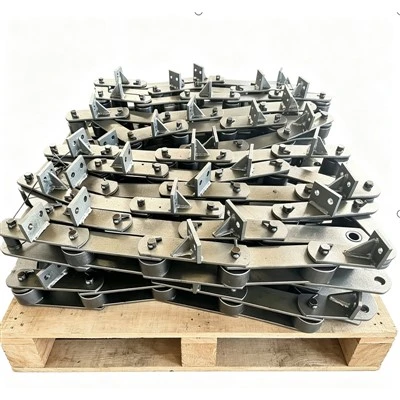
At the end of the day, increasing conveyor chain durability isn’t about buying the most expensive chain—it’s about matching the chain to your application, installing it correctly, maintaining it consistently, and managing load and contaminants. As a conveyor chain supplier, our job isn’t just to sell you a chain; it’s to help you get the most life out of it, reduce downtime, and save money. If you’re dealing with frequent chain failures, or you want to extend your current chain’s lifespan, our team is here to help. We can review your application, recommend the right chain, or walk you through a custom maintenance plan to fit your needs.
Engineering Chain References
- American Society of Mechanical Engineers (ASME). (2019). B106.1M-2019: Conveyor Chains and Sprockets for General Duty and Heavy Duty Applications. ASME International.
- Society of Manufacturing Engineers (SME). (2021). Maintenance and Reliability Best Practices for Conveyor Systems. SME.
- Noria Corporation. (2020). Lubrication Fundamentals for Industrial Chains. Noria Corporation.
- Conveyor Equipment Manufacturers Association (CEMA). (2022). Belt Conveyors for Bulk Materials, 7th Edition. CEMA.
Anhui Huihuang Chain Transmission Co., Ltd.
Anhui Huihuang Chain Transmission Co., Ltd. is one of the most professional conveyor chain manufacturers and suppliers in China, also supports high quality customized service. Please feel free to buy discount conveyor chain made in China here from our factory. Welcome to contact us for pricelist and free sample.
Address: NO.3 YONGQIANG ROAD. JIXI.ANHUI.CHINA
E-mail: 754590660@qq.com
WebSite: https://www.hhchains.com/
