Hey everyone, it’s Jake here—been in the button bit game for 12 years, so when I get asked a random question like “Can a button bit be used for through-hole drilling?” I don’t just say yes or no. I dig into why people are even asking, and most importantly, what that actually means for you on the job site. Let’s cut the jargon and get real here. Button Bit

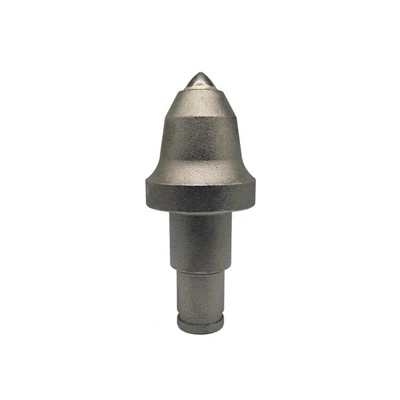
First off, let’s keep it simple for anyone not in the thick of mining, quarrying, or construction: a button bit is the little rotating cutter (usually with round, tungsten carbide buttons on the end) that sits on the drill bit head. The whole point of these things? They’re for hard rock—granite, basalt, iron ore, you name it. They don’t wear out fast like other bits when you’re drilling through dense stone. Now, through-hole drilling is exactly what it sounds like: drilling all the way through a material, not just a shallow hole for a blast. That could be for rock bolts in a tunnel, mounting posts in a quarry, or even core sampling for construction.
So the short answer first: yeah, you can use a button bit for through-hole drilling, but it’s not the one-size-fits-all fix some guys make it out to be. I’ve seen too many rookie drill guys grab a button bit meant for face drilling (that’s drilling into the surface of a rock face to create a bench for blasting) and try to drill a 10-foot through-hole, only to burn through the buttons in half the time. That’s why it’s all about matching the right button bit to the job—not just grabbing whatever’s in the truck bed.
Let’s break down the why button bits work for through-holes in the first place. Tungsten carbide buttons are tough—way harder than high-speed steel or even polycrystalline diamond compact (PDC) cutters. When you’re drilling through hard rock, those buttons don’t chip or flatten out as quick, which means you can keep drilling longer without stopping to change bits. For through-holes, that’s a huge win: every bit change costs time, and time is money on a job site. I had a customer last year who was drilling 15-foot through-holes for rock bolts at a new highway project—he was using old PDC bits before, and he was changing bits every 4 holes. Switched to our regular hard rock button bits, and he was getting 8 holes per bit. That’s half the downtime, easy.
But wait, there’s a catch here. Not all button bits are built the same. Let’s talk about button geometry for a second—don’t zone out, this matters. Button bits designed for face drilling have rounded buttons that sit really far out from the bit body. That works great when you’re drilling into a flat rock surface, but when you’re drilling through a hole, that overhang can cause the bit to “walk” off line, or worse, the buttons can break when you hit the far side of the rock. I’ve seen a guy snap 3 buttons in one hole because he was using a face bit for a through-hole that went right through a 12-foot granite ledge. The buttons hit the concrete pad on the other side at full speed, and boom—game over.
What you need for through-hole drilling is a button bit with shorter, more recessed buttons, or a flat-faced bit design. The buttons sit closer to the body, so the bit tracks straight, no walking. Also, the spacing between buttons is wider on through-hole bits—they don’t clog with cuttings as easy when you’re drilling a deep hole. Clogging is the #1 killer of deep through-holes, honestly. If the cuttings (the crumbly rock stuff) get stuck between the buttons, you lose pressure, the bit spins without cutting, and you have to pull it out and clean it. That’s a pain, especially when you’re 10 feet in and the bit is stuck tight.
Another thing to consider is hole diameter. Most small button bits (under 2 inches) work fine for shallow through-holes, but when you’re going over 3 inches and 10+ feet deep, you need to look at the bit’s core. The central part of the bit that doesn’t cut—called the core diameter—should be small. Wait, why? Because that core has to stay connected all the way through the hole. If your core is too big, the rock core will break off mid-drill, and you’ll have to fish it out. That’s a whole other job, and it wastes so much time. Our through-hole specific button bits have a smaller core than standard face bits, so the rock core stays intact all the way through. I had a quarry customer a while back drilling 8-inch through-holes for lifting massive granite blocks—his old bit had a 2-inch core, and he’d get a broken core 7 times out of 10. Switched to our through-hole core design, and he got a full core every time. Saved him hours per day.
Now, let’s talk about when you should NOT use a button bit for through-hole drilling, because this is where a lot of guys mess up. If you’re drilling through soft rock like limestone or sandstone, a button bit is overkill. Those rocks are so soft you’ll just wear the buttons down for no reason—you’ll pay way more for button bits than you would for a regular twist bit or even a PDC bit. Also, if you’re drilling through something that’s not rock—like steel, concrete with rebar, or composite materials—button bits aren’t your guy. They’re designed for abrasive, hard rock, and they’ll skate all over rebar or get stuck in concrete way faster than a different type of bit.
Another common mistake: RPM and feed rate. Even if you have the right button bit, if you’re running it too fast or pushing too hard, you’ll ruin it. For through-hole drilling with button bits, you want a moderate RPM—around 100-200 RPM for hard granite, a bit higher for softer rock. If you crank the RPM up to 500, the buttons will overheat, and the carbide will soften, which means they’ll wear out in no time. I always tell my customers: start slow, feel the pressure. If the drill sounds like it’s straining, back off a little. That goes double for when you’re getting close to the far side of the through-hole—slow way down. The last thing you want is to punch through the other side at full speed, snap a button, and have to fish the bit out mid-hole.
Let me share a quick story to drive this home. Last year, I was at a mine in northern Ontario where the maintenance crew was drilling 12-foot through-holes for ventilation pipes. They were using standard face button bits, and they were going through 2 bits per hole. I showed them our line of through-hole specific button bits, and they were skeptical at first—said “Jake, we’ve always used these bits, why change?” I talked them into testing a single bit on one hole. By the end of the day, the crew foreman pulled me aside, handed me the old bit and the new one. The old one was halfway through its buttons, worn down to nubs. The new one looked almost brand new, and they’d drilled 14 holes with it. That’s the difference between using the right button bit for the job and guessing.
So to wrap this up: can a button bit be used for through-hole drilling? Hell yeah, but only if you use the right button bit. Don’t grab your face bit meant for bench blasting, don’t use it on soft non-rock materials, and don’t forget to adjust your drill speed and feed rate. Button bits are tough, reliable, and perfect for deep through-holes in hard rock—you just have to pick the one built for that exact task.
If you’re out there trying to figure out which button bit to use for your through-hole drilling, you’re probably wasting time guessing with trial and error. I’ve been doing this long enough to know every type of bit, every rock type, every job site scenario. Shoot me a message, tell me what you’re drilling, how deep, what size, and I’ll help you pick the right bit to save you time and money. No sales pitch, no bullshit—just real advice from a guy who’s been in the field. Hit me up whenever.
DTH Sub Adapter References:
- Mining and Rock Drilling Technology, International Society for Rock Mechanics and Rock Engineering, 2021
- Tungsten Carbide Button Bit Performance Optimization, Journal of Drilling Engineering, 2019
- Construction Through-Hole Drilling Best Practices, National Association of Construction Equipment, 2022
- Field Testing of Rock Drilling Bits: Operator Experiences and Recommendations, Drilling Contractors Association, 2020
Super Rock Machinery Equipment (Qingdao) Co., Ltd.
We are one of the most professional button bit manufacturers and suppliers in China, featured by quality products and good price. Please feel free to buy advanced button bit for sale here from our factory. Welcome to view our website for more information.
Address: No. 45, Pengwan Road, Qianwan Bonded Port Area, Qingdao Sub-district, Free Trade Pilot Zone, Shandong China
E-mail: sales@superrocktools.com
WebSite: https://www.superrocktools.com/
