If you’re in industries like semiconductor manufacturing, medical device production, aerospace, or advanced research, rare and special gas equipment isn’t just a piece of machinery—it’s the backbone of operations that demand ultra-high purity, precision, and safety. As a supplier who’s spent 12 years engineering, installing, and maintaining this exact gear, I’ve heard the same question a hundred times from facility managers, operations leads, and procurement teams: “What will this actually cost me beyond the initial purchase price?” It’s a fair question, because when you’re working with gases that cost hundreds or thousands of dollars per cylinder—think helium-3, krypton-85, specialty mixtures for lithography, or ultra-pure argon for biopharma processing—skimping on maintenance isn’t an option. But it’s also not a black-box expense. Let’s break down the real, granular maintenance costs of rare and special gas equipment, based on what I’ve seen in field service calls for hundreds of clients across North America and Europe. Rare/Special Gas Equipment
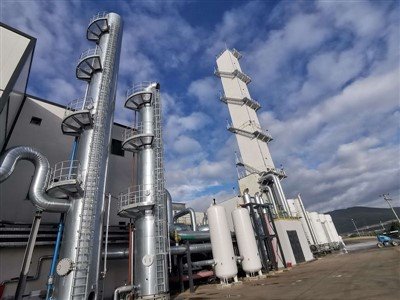
First, let’s define what we’re talking about here, because “rare/special gas equipment” is broad enough to include everything from high-pressure manifold systems for specialty gas blending to gas cabinets for semiconductor fabrication tools, leak detection systems for ultra-high-purity (UHP) lines, and vaporizers for cryogenic specialty gases. Unlike general industrial gas equipment, this gear is designed for strict purity levels (often 99.999% or higher) and handling gases that are toxic, flammable, corrosive, or even radioactive in small quantities—so maintenance isn’t just about fixing broken parts; it’s about preventing catastrophic safety hazards and product contamination.
The largest ongoing maintenance cost isn’t the parts, actually—it’s preventive maintenance (PM). Most of my clients who ignore scheduled PM end up paying 3–10 times more in reactive repairs, downtime, and compliance fines. Let’s use a common example: a four-cylinder manifold system for blending custom specialty gas mixtures. A standard preventive service for this unit costs roughly $850–$1,200 per visit, depending on location, parts needed, and the complexity of the gas mix. But what does that $1,000 service actually cover? We do a full leak check (using mass spectrometers, not just bubble solutions, because bubble solution misses leaks in high-pressure lines and can contaminate UHP gas), replace worn seals (like O-rings and diaphragms that degrade from exposure to corrosive special gases), calibrate pressure regulators (even a 1% calibration error can throw off a $5,000 batch of custom gas mix), and test safety interlocks—like the pressure relief valves that prevent overpressurization, which is non-negotiable for OSHA and ISO 10156 compliance.
For larger facilities with 10+ manifold systems, or gas cabinets for semiconductor fabs, those PM visits add up. A 10-cabinet installation for a 10,000-square-foot fab might run $3,000–$4,500 per service visit, and we recommend quarterly visits for toxic gas cabinets, versus semi-annual for non-toxic specialty gas manifolds. That’s because toxic gas cabinets have detection sensors that need monthly calibration, and the filters that neutralize toxic gas leaks have a finite lifespan. I once had a client who tried stretching service intervals to 9 months on their toxic gas cabinets to save money—they ended up with a sensor failure that triggered a plant evacuation, costing $2.2 million in lost production, OSHA fines, and emergency repairs. The $1,500 they saved on that skipped service? Chump change compared to that bill.
Next, parts replacement costs, and these are not the same as parts for standard industrial equipment. A standard pressure regulator for general nitrogen might cost $150, but a UHP regulator for custom arsine blends (used in semiconductor doping) can run $1,200–$2,800 each. And unlike standard regulators, these have to be certified to NIST (National Institute of Standards and Technology) standards, because even a tiny impurity from a used, uncertified regulator can ruin a lithography batch worth millions. Seals and diaphragms are another big line item: a set of PTFE or Kalrez diaphragms for a specialty gas manifold is $250–$600, and they need replacement every 12–18 months, depending on usage and gas type. Corrosive gases like hydrogen chloride (HCl) eat through standard seals in 6–9 months, so clients working with those gases will have higher parts costs than those using non-corrosive mixtures.
Repair costs are the wildcard here, and they depend almost entirely on how well you keep up with PM. The most common repairs I get calls for are leak-related failures. A small, localized leak repair on a manifold might be $500–$1,000, but a full line replacement for a toxic gas cabinet can run $8,000–$15,000, because all lines have to be flushed with UHP nitrogen, tested for purity, and recertified. Another frequent repair is safety interlock failure—if a pressure relief valve malfunctions, that’s not a quick fix: we have to replace the valve, recertify the entire system, and run a full pressure test, which costs $2,500–$4,000, plus any downtime. I’ve also seen clients who tried to save money by using generic seals instead of OEM parts; a few of those ended up with seal ruptures that released flammable hydrogen gas, leading to $50,000+ in facility repairs and temporary shutdowns.
Don’t forget compliance and calibration costs, which are often overlooked until a regulatory audit. Most industries working with rare/special gases have strict standards: semiconductor fabs follow SEMI standards, medical device manufacturers follow FDA regulations, and facilities handling toxic gases have OSHA and EPA requirements. Calibration isn’t just a nice-to-have—it’s mandatory. A full annual calibration of a gas manifold system, including pressure gauges, flow meters, and leak detectors, costs $1,200–$2,000. For facilities with gas chromatography systems used to test gas purity, calibration runs $800–$1,500 per unit, plus the cost of reference gas mixtures (which are themselves specialty gases, costing $300–$800 per cylinder). Missing a calibration deadline can lead to fines ranging from $1,000 for small facilities to $100,000+ for large industrial operations, plus lost product if your gas purity is out of spec for your end product.
Then there’s the cost of downtime, which is maybe the biggest hidden maintenance cost of all. For a semiconductor fab, a single hour of downtime during production runs can cost $100,000 or more. For a biopharma plant making cell therapy products, downtime can mean missing clinical trial deadlines, which has even higher financial and reputational costs. Scheduled PM is designed to minimize downtime—we work with clients to schedule services during off-shift hours, usually nights or weekends, so operations don’t stop. But reactive repairs? Those can come at any time, often during peak production hours, and we have to send a technician out as fast as possible, which adds emergency service fees (usually $200–$400 per hour, on top of parts and labor). I had a client in aerospace manufacturing once whose helium gas line failed during a critical composite curing process; we had to dispatch a technician 3 hours away on a Saturday, and the total repair cost—including emergency travel, overtime labor, parts, and 2 hours of downtime—came to $18,000. That same work would have cost $1,100 if we’d done it during a scheduled quarterly PM 2 months prior.
One question I get a lot is: “Are there ways to reduce maintenance costs without cutting corners on safety and compliance?” The short answer is yes, but only if you work with a reputable supplier who offers tailored service plans, not one-size-fits-all pricing. For example, many of my clients opt for a fixed-rate service contract, which covers all PM, routine parts replacement, and priority emergency service for a set monthly fee (usually 2–3% of the initial equipment purchase cost annually). That’s a great deal because it eliminates unexpected cost spikes, and we build the service around your specific gas types and usage rates—so if you use more corrosive gases, we adjust the parts replacement schedule to match. Another way to save is to invest in remote monitoring systems for your gas equipment. We install sensors that track pressure, purity, and leak levels in real time, so we can flag potential issues before they become failures—this reduces reactive repairs by 40% on average, based on my client data. For example, a client using remote monitoring noticed a slow pressure drop in their argon line, and we were able to fix a tiny seal leak during a PM visit, avoiding a potential full line replacement and $12,000 in downtime.
I also want to be transparent about what’s not included in these costs. Most of the time, we don’t cover the cost of gas itself, or the cost of facility modifications that might be needed to accommodate new equipment or service. We also don’t cover damage from user error—like if a facility employee makes an unapproved modification to a gas line, that’s a separate repair cost. But that’s standard across the industry; reputable suppliers won’t cover damage caused by improper use, because that’s avoidable with basic training, which we also offer as part of our service plans for no extra cost.
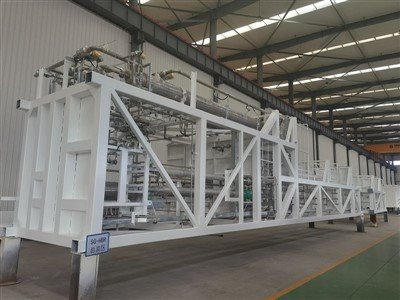
Over my 12 years in this business, I’ve seen too many clients treat maintenance for rare/special gas equipment as an afterthought, only to end up paying exponentially more in the long run. The equipment isn’t cheap upfront—we’re talking $10,000 for a basic manifold system, up to $100,000+ for a full UHP gas cabinet system for a fab—but the maintenance is manageable when you plan for it. The key is to work with a supplier who knows the specific needs of your industry, not a general industrial gas company that cuts corners on specialized service.
CO2 Plant If you’re looking to get a clear, accurate breakdown of maintenance costs for your specific rare or special gas equipment, or you’re considering upgrading your system and want to factor long-term maintenance into your budget, I’m here to help. We work with clients across all industries, from small biotech startups to large semiconductor fabs, and we tailor every service plan to your exact usage and compliance requirements. Reach out to us to schedule a consultation, and we’ll walk you through every cost, no fine print, no hidden fees.
References
- Semiconductor Equipment and Materials International. (2022). SEMI Standard C3.10-02: Practice for Maintenance of Gas Delivery Systems for Semiconductor Manufacturing.
- Occupational Safety and Health Administration. (2021). Process Safety Management of Highly Hazardous Gases (29 CFR 1910.119).
- National Institute of Standards and Technology. (2020). Calibration Requirements for Ultra-High-Purity Gas Delivery Systems (NIST Special Publication 250-87).
- Global Special Gas Association. (2023). Field Maintenance Best Practices for Rare and Specialty Gas Handling Equipment.
Hanturbo Technology (Zhejiang) Co., Ltd.
Hanturbo Technology (Zhejiang) Co., Ltd. is one of the most professional rare/special gas equipment manufacturers and suppliers in China, also supports custom service. We warmly welcome you to buy discount rare/special gas equipment made in China here and get quotation from our factory. For price consultation, contact us.
Address: No.118, Wangluo Road, Deqing County, Huzhou City, Zhejiang Province, China.
E-mail: andyxu@hanturbo.com.cn
WebSite: https://www.hanturbo-gas.com/
