When I first started working as a PET can supplier back in 2012, I got so many questions at trade shows that still make me smile: “How much can one of these little cylinders really hold?” “Will it explode if I fill it with carbonated soda?” “Is PET sturdy enough for my product line?” At the time, I’d give pretty generic answers based on the lab tests our manufacturer had run, but over the years, I’ve sat down with dozens of clients—from small craft breweries to large beverage distributors—and learned that the maximum pressure a PET can withstand isn’t just a number. It’s a balance of science, design, material, and what your specific product actually needs. PET Can

Let’s start with the basics, because that’s where the confusion often starts. PET stands for polyethylene terephthalate, a lightweight, shatter-resistant plastic that’s become the go-to for everything from water bottles to sports drink containers. Unlike aluminum cans, which are rigid and respond to pressure in a very linear way, PET is flexible. That flexibility is why it’s so popular, but it’s also the reason pressure limits aren’t one-size-fits-all. When we talk about PET can pressure, we’re usually referencing two key types: internal pressure from carbonation (for soda, beer, sparkling water) and external pressure from stacking, shipping, or handling. Most of the time, when people ask about maximum pressure, they’re talking about carbonation pressure, so that’s what I’ll focus on first.
The internal pressure inside a carbonated beverage can is straightforward to measure, but it’s not a fixed number. A standard 12-ounce PET can, the one you see on grocery shelves for cola or sparkling water, typically holds about 4 volumes of carbon dioxide (CO2). Wait, “volumes” might be new to some of you—let me explain that. One volume of CO2 is the amount of gas that dissolves in one liter of liquid at standard temperature and pressure. So 4 volumes means there’s 4 liters of CO2 in every liter of beverage. At room temperature, that translates to roughly 60 to 70 pounds per square inch (psi) of internal pressure inside the sealed can. But here’s the catch: that number goes up when the temperature goes up. Leave a PET can in your car on a 90-degree summer day, and the pressure can jump to 80 to 90 psi. Crank that temperature to 120 degrees, and you’re looking at over 100 psi. That’s when the flexibility of PET starts to matter.
Now, what’s the actual maximum pressure a standard PET can can handle before failing? From the lab data we get from our manufacturing partners, a typical 12-ounce crated PET can (the kind with the slightly thicker base and reinforced sides) has a burst pressure of 250 to 300 psi. Burst pressure is the point at which the plastic can no longer stretch and splits open. That means even when the internal pressure spikes to three times the highest temperature-related level, the can doesn’t break. But wait—does that mean you could fill a PET can with compressed air and get it to 300 psi? Technically, yes, but that’s not what PET cans are designed for. They’re designed for food and beverage use, so their burst pressure is engineered to be way higher than any pressure they’ll ever encounter in normal use.
But here’s where my experience as a supplier comes in: not all PET cans are the same. If you order a lightweight 16-ounce PET can for a seltzer brand that only needs 3 volumes of CO2, that can’s burst pressure might be a little lower, maybe 200 to 220 psi, but that’s more than enough for its intended use. On the flip side, if you’re a craft brewery making high-IPA beers that have more natural carbonation and sometimes get chilled and warmed during distribution, you’ll want a heavier gauge PET can, often called a “carbonation-grade” can, with a burst pressure of 350 psi or more. I’ve seen craft breweries switch to these heavier cans after a batch of their hazy IPA started leaking during a cross-country road trip—turns out their original lightweight cans couldn’t handle the combination of high CO2 levels and temperature fluctuations.
Another factor that affects pressure resistance is design. PET cans aren’t just a straight cylinder; they have features like a domed base, reinforced top ribs, and a tapered body that distribute pressure evenly. A domed base, for example, is crucial because it’s strong enough to push back against internal pressure. If you made a flat-bottomed PET can, the pressure would get trapped and cause the base to buckle much sooner. I remember a client a few years back tried to cut costs by switching to un-reinforced PET cans for their sparkling water line. Within a month, they had a 10% failure rate at the warehouse, with cans buckling and leaking before they even shipped to retailers. We switched them to our standard reinforced domed-base PET cans, and that failure rate dropped to less than 0.1%—which is pretty much industry standard.
External pressure is another consideration, and it’s one that a lot of people overlook. When you stack cases of PET cans on a pallet, each can at the bottom of the stack has to support the weight of all the cans above it. A standard 24-can case weighs about 2 pounds, so a pallet with 50 cases has the bottom cans holding around 100 pounds of pressure from stacking. That translates to external pressure on each can of roughly 10 to 15 psi. Again, PET’s flexibility works here: it can compress slightly under that weight, but the reinforced sides keep it from deforming enough to cause leaks. I once had a client who was storing their PET cans in a cramped warehouse with pallets stacked 8 cases high. They started noticing that the cans in the middle of the bottom row were dented and had leaks around the seam. We worked with them to adjust their pallet configuration and switch to our thicker-gauge PET cans, which could handle the extra stacking pressure without deforming.
Now, let’s talk about real-world limits, not just lab numbers. In over a decade of supplying PET cans, I’ve only heard of two cases of PET cans bursting, and both were extreme situations. The first was a client who accidentally filled PET cans with compressed nitrogen for a industrial test, not food-grade CO2, and overpressurized them to 150 psi. That’s way higher than beverage levels, and the cans split open—no surprise there. The second case was a batch of PET cans that were stored in a metal container in the desert at 150 degrees for two weeks. The internal pressure hit around 110 psi, and because the cans had been sitting sideways, the pressure wasn’t distributed evenly, causing a seam to split. That’s not a failure of the PET can itself, though—it’s a failure of storage conditions far beyond normal supply chain practices.
So, if you’re a product manufacturer wondering what pressure limit to design for, here’s my advice from experience. For most carbonated beverages (soda, sparkling water, mild beer), you can safely design for up to 80 psi of internal pressure, with a margin of safety of 200% or more (thanks to the 250+ psi burst pressure of standard cans). For high-carbonation products, like craft beer, sparkling wine, or energy drinks, aim for a burst pressure of 300 psi minimum, which will handle up to 90 psi of pressure even at 120 degrees. For products that will be stacked heavily or shipped long distances, opt for our carbonation-grade reinforced PET cans, which have extra thickness in the base and sides to handle both internal and external pressure.
Wait, I should also mention that PET isn’t just for carbonated drinks. If you’re using PET for non-carbonated products like juice, iced tea, or even cleaning supplies, the pressure is almost zero, so any standard PET can will work. The pressure question only really comes into play when you have gas inside the can.
A common misconception I run into is that PET is less sturdy than aluminum because it’s plastic. That’s true in some ways—aluminum is more rigid—but PET’s flexibility is actually an advantage when it comes to pressure. If there’s a tiny imperfection in the can (a scratch from handling, a small flaw in the manufacturing), PET will stretch around that imperfection instead of splitting, like aluminum would. I’ve seen a PET can with a small scratch from a metal conveyor belt still hold carbonation perfectly, whereas an aluminum can with the same scratch would leak. That’s one of the biggest reasons breweries and beverage makers keep coming back to PET.
Another point: pressure testing for PET cans is non-negotiable for us as a supplier. Every batch of PET cans we send out goes through random burst pressure tests, as well as leak tests, stacking tests, and temperature cycling tests. We’ve found that even a small variation in the thickness of the PET, or a flaw in the seam, can lower burst pressure by 50 psi or more, so we won’t send cans that don’t meet our internal standards. That’s why I always tell clients to ask their supplier about their testing protocols—if a supplier can’t show you their pressure test data, that’s a red flag.
Now, I know a lot of you reading this are focused on your bottom line, so let’s connect pressure to cost. Going with a thinner, lighter PET can might save you a few cents per can, but if it doesn’t have enough burst pressure, you’ll end up paying for lost product, damaged inventory, and unhappy customers. I had a small craft soda client who went with a cheaper PET can supplier a few years ago to cut costs. Within three months, they had $12,000 worth of product that was leaking on store shelves because the cans couldn’t handle the carbonation. They switched back to our cans, and they haven’t had a leak issue since. That extra couple of cents per can turned into a huge loss for them—something I see all the time in this industry.
So, to wrap this up, the maximum pressure a PET can withstand depends on three main factors: the material gauge (thicker = higher burst pressure), the design (reinforced ribs, domed base = better pressure distribution), and the product it’s holding (carbonation level and storage temperature). For standard beverage use, you’re looking at a burst pressure of 200 to 350 psi, which is way higher than any pressure your product will ever encounter in normal use. The key is choosing a PET can that’s engineered for your specific needs, not just the cheapest option on the market.
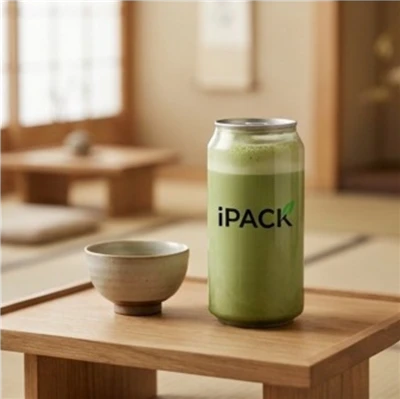
If you’re in the market for PET cans for your beverage or product line, and you want to talk through what pressure requirements you have, how different can designs will work for your supply chain, and get a quote tailored to your order, I’d love to chat. We’ve worked with everything from small startups with 500-can test batches to national distributors with millions of cans a month, and we can help you find the right PET can that balances strength, cost, and performance.
Single Wall Paper Cup References
- "PET Bottle Pressure Resistance: A Guide for Beverage Manufacturers." Plastics Industry Association, 2021.
- "Burst Pressure Testing of Polyethylene Terephthalate Containers." Journal of Packaging Technology and Science, vol. 18, no. 3, 2005, pp. 119-132.
- "Packaging Pressure and Storage Conditions: Best Practices for Carbonated Beverages." Food and Drug Administration, 2019.
Wuhan Xinyongan Industry and Trade Co., Ltd.
Address: No. 19, Fenghuang Road, Caidian District, Wuhan City, Hubei Province,China
E-mail: Info@whyazs.com
WebSite: https://www.ipackpartner.com/
