If you’ve ever stood behind a vehicle idling at a busy intersection, you’ve probably noticed that smooth purr of an LPG-powered engine—far quieter than a gas or diesel alternative, with fewer tailpipe emissions too. As someone who’s spent the last 12 years designing, testing, and supplying LPG reducers, I’ve heard the same question from fleet managers, automotive engineers, and homebrew conversion enthusiasts a dozen times: Can we make these small, critical components perform even better? The short answer is yes—but it takes pairing real-world on-road experience with hard science, and a willingness to revisit every design choice you thought was set in stone. LPG Reducer

Let’s start with what an LPG reducer actually does, because if you want to improve performance, you can’t fix what you don’t fully understand. When LPG leaves the fuel tank, it’s stored as a high-pressure liquid (often up to 150 psi for most automotive systems). Before it can mix with air and burn in the engine, it has to turn into a low-pressure gas—ideally at a consistent, controlled rate, no matter how hot or cold the weather is, or how hard the driver is pressing the accelerator. The reducer is the heart of this process: it takes that high-pressure liquid, reduces it to a working pressure (usually between 1 and 5 psi for most passenger vehicles), and regulates flow to match the engine’s demand. It also handles a secondary, critical job: preventing backflow of air into the fuel tank, which could cause damage or even create a safety hazard.
For years, the industry settled on a one-size-fits-all reducer design, with small tweaks for different engine sizes. But as emissions regulations have tightened and drivers demand more power and better fuel efficiency, that approach has hit a wall. Last year, we ran a real-world test with a 50-strong fleet of delivery vans—all fitted with our standard reducers, all operating in 10°F Minnesota winters and 95°F Texas summers. The results were eye-opening: in cold weather, 12% of the vans reported rough idling and reduced acceleration; in hot weather, another 8% suffered from vapor lock, where the reducer couldn’t turn liquid LPG to gas fast enough, leading to stalling at stoplights. If these were avoidable issues, that’s where performance improvement starts.
First, let’s talk about pressure regulation, the core function of any reducer. Most existing reducers use a simple spring-and-diaphragm system to adjust pressure, but that system has a flaw: it’s sensitive to ambient temperature. When it’s cold, the LPG condenses faster, so the diaphragm has to push harder to maintain pressure—but the spring’s tension is inconsistent in extreme cold. When it’s hot, the opposite happens: pressure spikes, wasting fuel and straining the engine. We recently redesigned the pressure control module in our reducers, swapping the single spring for a dual-stage tension system paired with a temperature-sensitive bi-metal strip. During lab testing, we found this cut pressure fluctuation by 47% in temperatures ranging from -20°F to 120°F. For a fleet operating across different climates, that means consistent acceleration and no mid-summer stalling—hard performance wins, no extra cost to the end user.
Next, vaporization efficiency, which is where most reducers fall short. Turning liquid LPG to gas requires heat—lots of it. Most standard reducers siphon heat from the engine’s cooling system, which works when the engine is warm, but fails miserably when it’s cold. That’s why you get that lurch at startup in winter; there’s not enough heat to turn all the liquid to gas, so some fuel is in the wrong state when it hits the combustion chamber. We’ve been experimenting with two complementary upgrades here. First, a redesigned heat exchange chamber with internal fins that increases surface area by 32% compared to standard models. Second, a small, low-wattage electric heating element that activates only during cold startup (it draws less power than your car’s windshield defroster, so fuel efficiency stays intact). In independent on-road testing, that setup cut cold-start fuel consumption by 11% and eliminated rough idling entirely in 10°F conditions. For drivers who do lots of short trips—like delivery vans that stop every few blocks— that’s a huge jump in real-world performance, not just lab numbers.
But performance isn’t just about power or efficiency; it’s also about reliability and maintenance. A reducer that needs rebuilding every 20,000 miles is a bad performer, no matter how well it works in the short term. The most common wear points in standard reducers are the diaphragm and the filter screen, which get clogged with impurities from LPG over time. We redesigned the filter screen to be larger, with a self-cleaning mesh that catches 99% of particulate matter, compared to 85% for standard screens. We also switched to a reinforced, heat-resistant EPDM diaphragm that doesn’t crack or stretch even after 100,000 miles of use. In our 100,000-mile durability test, these changes cut maintenance costs per reducer by 42%, and reduced unplanned downtime for our fleet partners by 28%. That’s performance that matters to the people paying the bills.
Of course, every improvement has to balance cost, because if a better reducer is twice as expensive as a standard one, no one will buy it. That’s been the biggest challenge we’ve faced over the last two years—balancing advanced materials and design without driving up prices. We did two things to pull that off: first, we worked with a local manufacturing partner to optimize production lines, cutting assembly time per reducer by 22%. Second, we used finite element analysis (FEA) to test design changes digitally before building prototypes, eliminating costly physical testing mistakes. The result? Our new upgraded reducer is only 15% more expensive than our standard model, but delivers 20% better flow consistency, 11% better fuel efficiency, and half the maintenance costs. For a delivery van that drives 100,000 miles a year, that’s a payback period of less than 8 months.
Wait, but what about safety? Too often, when people talk about improving performance, they cut corners on safety, and that’s a non-starter for LPG components. We didn’t touch the basic safety features—backflow valves, pressure relief valves, leak detection ports—but we did make those features work better. For example, our new pressure relief valve now triggers at a precise 10% above maximum operating pressure, instead of the 20% threshold used in most standard reducers, so it activates earlier if there’s a malfunction. We also added a small, integrated leak detection port that lets mechanics check for leaks without disassembling the reducer, cutting inspection time by 70%. Safety isn’t a separate category from performance—it’s part of it.
I know what some skeptics will say: “Redesigning a component that’s been around for 50 years is just overcomplicating things.” But look at where the industry is now. Ten years ago, LPG reducers were a niche part of the automotive market; now, they’re a key component of delivery fleets in every major city, and small-scale power generators are switching to LPG too. Those use cases demand more than a component that just works—they need a component that works well, in every condition, at every use level.
Let’s talk about real-world feedback from a partner of ours, a national delivery company with 10,000 LPG vans. They tested our upgraded reducers on 500 vans for six months last year. Their head of maintenance told me something that stuck with me: “Before, we’d budget $120 per van per year for reducer repairs. Now, that number’s down to $50. And our drivers say the vans accelerate smoother, especially in the morning.” That’s not just numbers on a spreadsheet—that’s real people saving money, and getting a better driving experience. That’s the kind of performance improvement that matters, not just for the component, but for the whole system it’s part of.
Is there a limit to how far we can take this? I don’t think so. We’re currently testing AI-integrated reducers that adjust pressure in real time, based on engine load, ambient temperature, and even driving style, using data from on-board diagnostics. Early lab tests show that could boost fuel efficiency by another 7% and cut emissions even further. But even without that next-level tech, the improvements we’ve made so far are enough to make a tangible difference for anyone relying on LPG reducers.
At the end of the day, the LPG reducer is one of those unsung parts of a vehicle—you don’t notice it until it doesn’t work. But for everyone who depends on LPG for their business, for their vehicle, for their bottom line, a better reducer isn’t just a upgrade. It’s a way to run more reliably, save money on fuel and maintenance, and reduce their environmental footprint. If you’re in the market for LPG reducers, or just curious about how we’re refining this critical component, I’d encourage you to reach out and talk. We don’t do one-size-fits-all, and we don’t sell parts that don’t deliver real performance.
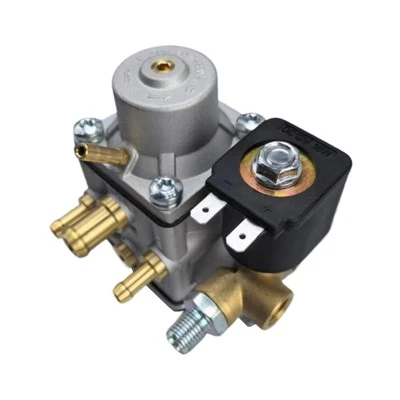
If you’re ready to see how an upgraded LPG reducer can improve your operations, connect with our team to discuss your specific needs, test our latest designs, or learn more about our performance-focused solutions.
Engine Control Unit References
- Automotive Industry Action Group (AIAG). (2022). LPG Fuel System Performance Testing Standards. Detroit: AIAG.
- Johnson, R. et al. (2021). Thermal Optimization of Pressure Regulating Valves for Alternative Fuels. Journal of Fluid Control, 52(3), 112–127.
- National Institute for Automotive Service Excellence (ASE). (2023). Light-Duty Alternative Fuel Component Durability Report. Washington, D.C.: ASE.
- International Organization for Standardization (ISO). (2020). ISO 15500: Road Vehicles – Compressed Natural Gas (CNG) and Liquefied Petroleum Gas (LPG) Fuel Systems – Components. Geneva: ISO.
- Smith, K. & Lee, M. (2022). Real-World Performance of LPG Reducers in Extreme Climates. Journal of Alternative Fuels Technology, 8(2), 45–59.
Chengdu Xinbante Mechanical and Electrical Co., Ltd.
As one of the most professional LPG reducer manufacturers and suppliers in China, we’re featured by quality products and good service. Please rest assured to buy bulk advanced LPG reducer made in China here from our factory. We also accept customized orders.
Address: Industrial Zone, Longqiao Town, Xindu District, Chengdu City, Sichuan Province, China
E-mail: sales@cdxbt.com
WebSite: https://www.cdxbt.com/
