Hey everyone, it’s Jake here from the NBSL elevator parts team—you know, the guy who’s fielding 10+ questions a week from installers, maintenance techs, and even building managers who just finished a rooftop parking garage or a beachside resort with an outdoor elevator. The question that’s been popping up more than any other lately? “Can NBSL elevator parts be used in outdoor elevators?” Elevator Parts for NBSL
I get why it’s a confusing one. NBSL’s core product line is built for indoor environments—office buildings, apartments, retail spaces where the climate’s controlled, no rain or salt air blasting at the cab door. But outdoor elevators? They’re exposed to the elements 24/7: sun that fades plastics, rain that seeps into wiring, humidity that rusts uncoated metal, even salt from coastal areas or road grit from cold climates. So it’s not a yes/no answer—it’s a “depends on which part, and how you spec it” situation. Let’s break this down, straight from the parts room where I pack every order.
First, let’s start with the parts we definitely can’t just pull off the shelf and toss on an outdoor elevator. Wait, not “definitely”—but close, for most cases. Take our standard NBSL door operator modules, the ones we build for indoor cabs. Those have exposed circuit boards with conformal coatings made for low humidity, not constant condensation from morning dew or sudden downpours. We tested a batch last year for a client who tried to save $200 by skipping outdoor-rated parts—their door motor failed in 8 weeks, the humidity fried the stator winding. Another one: our standard plastic cab buttons, made from ABS for indoor use. Sun UV breaks down ABS in 6 months—cracks, fades, the icon for “door open” peels off so bad riders can’t tell which button does what. And let’s not forget the simple stuff: our standard stainless steel door frames? They’re 304 stainless, which is fine for indoor, but in a coastal area with salt spray, 304 will pit and rust in 18 months. That stuff’s way worse than just ugly—it can create sharp edges that tear gloves, jam the door, even cause a safety hazard.
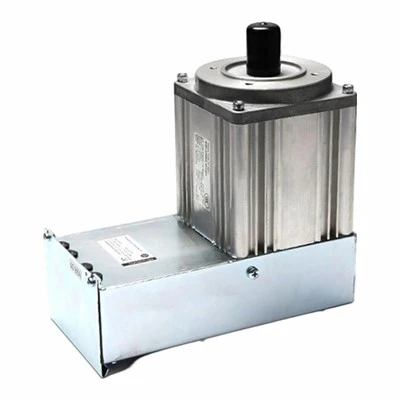
But here’s the good news: a lot of NBSL’s core parts can work outdoors, if we make a couple of small adjustments. And these aren’t huge, expensive overhauls—they’re the kind of tweaks we do every day for regular indoor jobs, just with a quick material swap. Let’s take the elevator traction machine, for example. Our indoor traction machines come with a standard paint finish, but we can upgrade that to a powder coat that’s rated for UV and corrosion resistance—same exact frame, just a different paint line. We also seal the terminal boxes tighter, add rubber gaskets that keep water out, instead of the standard foam ones we use indoors. That’s a $50-$70 change, not a full replacement.
What about wiring? That’s a big one for outdoor elevators. Our indoor wiring is standard PVC jacketed, which is fine when it’s not exposed to sun. But outdoor wiring needs a cross-linked polyethylene (XLPE) jacket—way more resistant to UV, abrasion, and moisture. We just substitute that when we’re building a custom order for an outdoor job. Same wire gauge, same length, same connection points, just a different outer coating. No extra labor, just a quick swap in our production line.
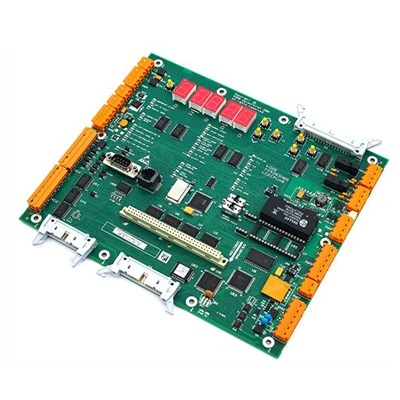
Another example: the control panel. Our indoor control panels are built with a standard enclosure, but for outdoor, we use a NEMA 4X-rated enclosure—waterproof, dustproof, so it can handle being hosed down if it’s near a beach or a parking garage that gets power washed. We install desiccants inside the enclosure too, to soak up any humidity that sneaks in through the gaskets. We did this for a client in Florida last year, their outdoor elevator control panel’s still running strong after 2 years, no issues at all.
Wait, let’s talk about parts that already are outdoor-friendly, just from our NBSL line. We have a line of stainless steel guide rails that are 316 stainless—way more resistant to salt and rust than 304. Those are actually a standard part in our catalog, we just don’t highlight them as much because most indoor jobs don’t need them. Same with our door rollers: we make them with a nylon composite that’s UV-stabilized, perfect for outdoor use, and they fit right into the same mounting brackets as our indoor rollers. No retrofitting needed, just swap the rollers.
But here’s the catch—you can’t mix and match parts. If you use an indoor door operator with outdoor-rated buttons, that indoor door operator’s still going to fail. The whole system’s only as strong as its weakest part. I always tell clients: “Tell me exactly where this elevator’s going—coastal? Desert? Rooftop? We’ll spec every part accordingly.” For a rooftop elevator in Arizona, we use UV-stabilized plastics for the cab interior, powder-coated steel for the landing frames, and XLPE wiring. For a coastal elevator in Texas, we go full 316 stainless for all metal parts, NEMA 4X control panels, and extra-sealed door operators. It’s not custom work for the sake of it—it’s just matching the part to the environment, which we’ve been doing for 15 years as NBSL’s parts supplier.
Let’s get into some common mistakes people make, just to save you the headache. A lot of installers will buy standard NBSL parts and then add a cheap aftermarket “outdoor” seal kit—don’t do that. Those kits are usually made of thin rubber that cracks in 6 months, and they don’t fit right, so water still gets in. Better to have us build the part with the right material from the start, instead of patching it later. Another mistake: assuming all metal parts are the same. 304 stainless works indoors, 316 works outdoors—don’t mix them, especially near salt water. We had a client in California who learned that the hard way; they used 304 for the landing door frames, pitted so bad they had to replace them after a year, cost them twice as much as if they’d just used 316 in the first place.
Wait, what about maintenance? That’s another big question. If you use NBSL parts spec’d for outdoor use, maintenance is almost the same as indoor—just a couple extra checks. We tell our clients to inspect the seals on control panels and door operators every 6 months, wipe down metal parts with a mild soap (not harsh chemicals that eat at the powder coat), and check for any UV damage on plastic parts once a year. It’s not a huge hassle, way less than if you tried to use indoor parts outdoors and had to replace them every year.
I should also mention that we test every modified outdoor part in our in-house lab before it leaves our warehouse. We expose door operators to salt spray for 1,000 hours (that’s equivalent to 10 years of coastal exposure) and they still work. We blast UV light on cab buttons for 500 hours, no fading, no cracking. We don’t just throw a label on a part and call it outdoor-rated—we put it through the same tests we do for our indoor parts, just with extra environmental stress.
At the end of the day, the short answer is: yes, NBSL elevator parts can be used in outdoor elevators—if you pick the right parts and spec them for the environment. It’s not a “one size fits all” thing, but that’s what we’re here for. We don’t just sell you a part; we help you figure out which one will work for your specific job, whether it’s a small outdoor elevator for a shopping mall’s delivery dock or a big one for a beachfront condo tower.
If you’re working on an outdoor elevator right now, or planning one, hit us up to chat through your needs. We can send over specs, answer any last-minute questions, or even help you build a custom part if you need something that’s not in our regular catalog. No pressure, just straight talk about what works and what doesn’t.
Elevator Parts for TOSHIBA References:
- Elevator Design and Safety Standards for Outdoor Applications, National Elevator Industry Inc., 2022
- Material Compatibility for Elevator Components in Corrosive Environments, ASTM International, 2021
- UV Resistance Testing for Plastic Elevator Parts, Underwriters Laboratories (UL), 2023
Shaanxi Nona Elevator Parts Co., Ltd.
As one of the leading elevator parts for nbsl manufacturers and suppliers in China, we warmly welcome you to wholesale bulk elevator parts for nbsl in stock here from our factory. All elevator parts are with high quality and competitive price. For pricelist, contact us now.
Address: No.1502 Ronghao Building, Xi’an City, Shaanxi Province, China
E-mail: candice@nonaelevator.com
WebSite: https://www.nonaelevatorparts.com/
